


When two policies both say a rental property is covered, the word covered can mean very different things. What it means depends on the causes-of-loss form behind the policy.
Special form vs. basic form
Special form covers every cause of loss except the ones the policy specifically excludes. It is the broadest property form commercially available. Basic form, also called named perils, works the other way: it covers only the specific perils it lists, and anything not on that list is not covered.
Our carriers write the special form. Many programs an investor considers are written on basic form, or on special form with sublimits and valuation terms that quietly narrow what the policy actually pays.
Where the difference shows up
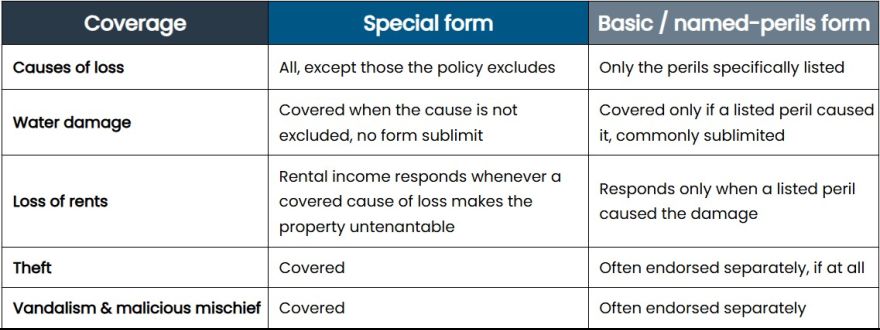
Flood, surface water, and storm surge sit outside both forms. Those causes are excluded on special form and basic form alike, and your client addresses them through separate flood coverage.
What to check on a declarations page
- Whether the causes-of-loss form is special form (open perils) or basic form (named perils).
- Any sublimit on water damage, and whether water back-up is included.
- Whether loss of rents follows the policy's covered causes of loss.
- Whether theft, vandalism, and malicious mischief are included or endorsed separately.
- Whether the building is valued at Replacement Cost or Actual Cash Value, and any condition tied to roof age.
At claim time: when water damage occurs from a cause the policy does not exclude, such as an accidental discharge from plumbing or an appliance, a special-form policy responds up to the policy limit. A basic form may cap that same claim at a fraction of the loss, or exclude it. The premium difference between the two forms is usually nominal. The coverage difference is what your client feels when the claim is filed.
The declarations page rarely tells the whole story. The causes-of-loss form and the endorsement schedule do.